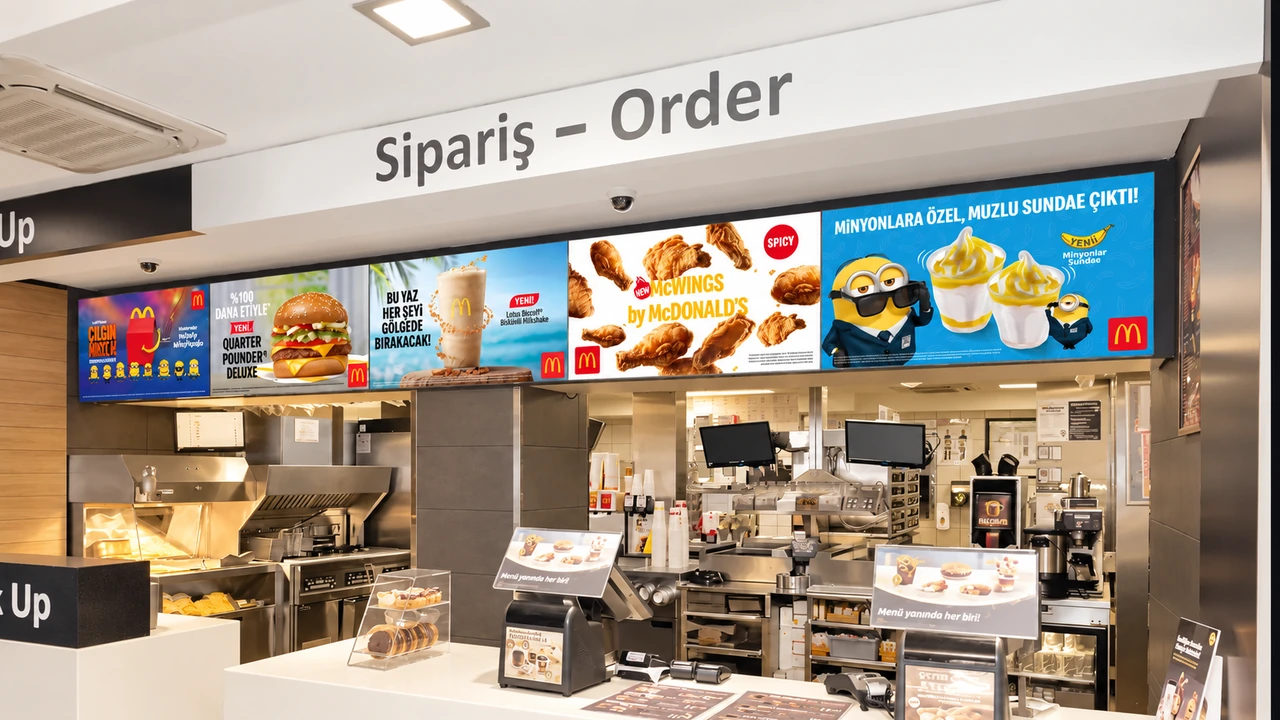
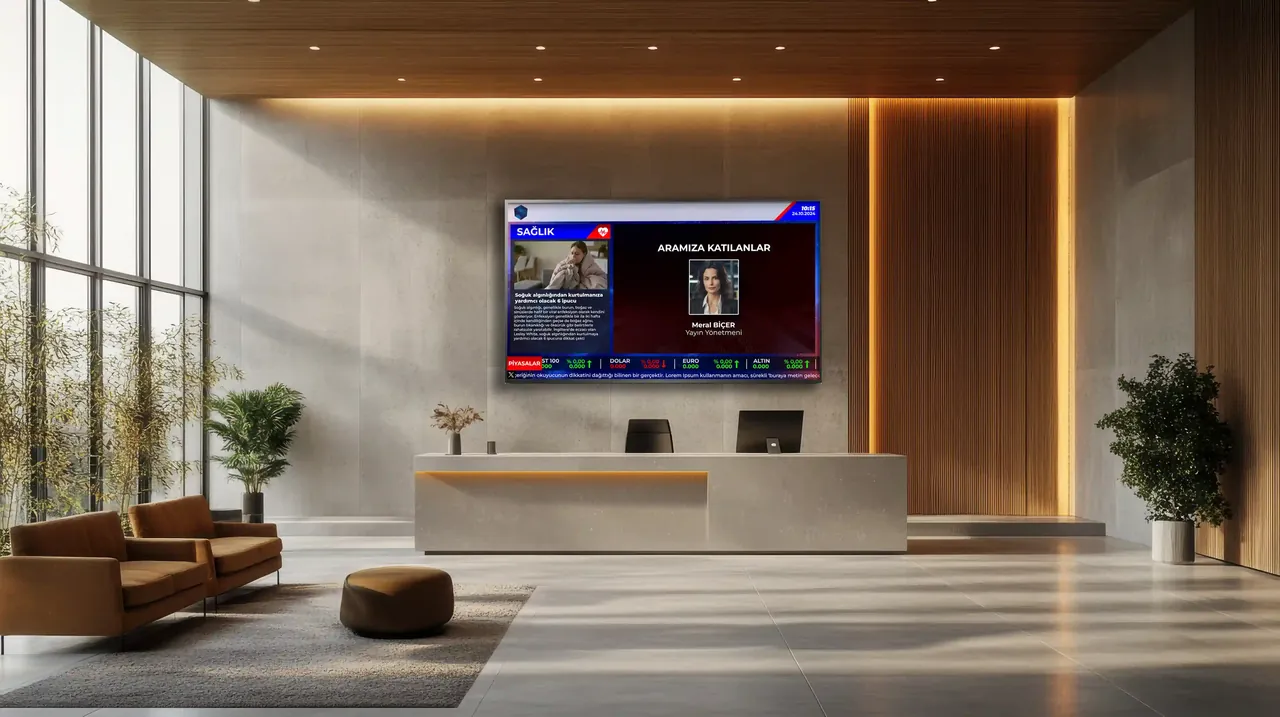
Standard 16:9 displays don't fit everywhere. On long but narrow surfaces such as above shelves, behind checkouts, below shop windows and on corridor ceilings, stretch displays are used. You can think of these displays as a standard display stretched horizontally.
What makes a stretch display different?
Stretch displays have a much wider aspect ratio than conventional displays. Samsung's SH37C model is 37 inches, with a resolution of 1920×540 and an aspect ratio of 16:4.5. With 700 nits of brightness and support for 24/7 operation, it can be used all day in bright store environments. Values are taken from the manufacturer's technical specifications.
Where is it used?
- Above shelves: Price, campaign and wayfinding information for the product group is shown directly above the shelf.
- Above checkouts and counters: Queue information, campaigns and upsell suggestions are placed at the customer's eye level.
- Shop windows: Messages are delivered on the lower or upper band of the shop window glass without blocking the product display.
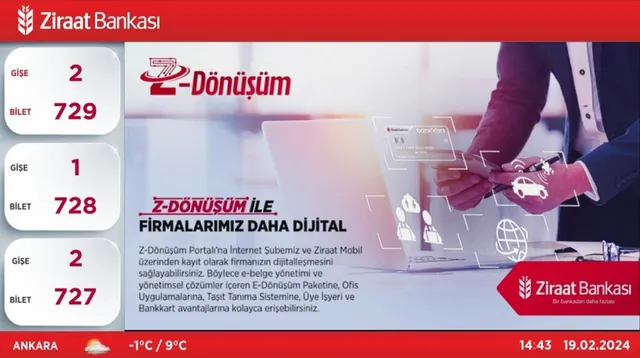
- Waiting and transport areas: Queue numbers and departure and arrival information are shown legibly in narrow spaces.
What to keep in mind when preparing content
Content for stretch displays should not be a cropped version of standard display content. Text should be kept short, and single-line messages and horizontally scrolling layouts are preferred. Product images should be recomposed for the height of the display. Content specific to the stretch format is prepared by our content and publishing team.
Content operations
Stretch displays are managed through SSCSign together with the other displays in your store. A campaign on the shelf display can be changed at the same time as the menu board or shop window display in the same store.
Summary
A stretch display is the right solution for narrow spaces where a standard display doesn't fit or would block the product display. The mounting point, viewing distance and content layout are determined together during the site survey.