Campaign posters in stores, signs on meeting room doors and wayfinding boards are often made of printed paper; every change means reprinting and replacing them by hand. Color e-paper displays bring the convenience of digital publishing to these points, with the thinness and simplicity of paper.
How does an e-paper display work?
Unlike LCD displays, e-paper displays don't emit light from behind; they create an image by reflecting ambient light. This makes the image look close to printed paper and easy on the eyes. The display uses energy only when the content changes; while the image is static, it consumes almost none. This means it can run on a built-in battery and be placed on a wall, glass or stand without a power outlet.
How it differs from an LCD display
- No cables or outlets needed: With its battery and wireless connection, it can be used where a power line can't be run.
- Thin and light: Simple to mount and easy to move.
- Doesn't play video: Since the image doesn't refresh as fast as an LCD, it isn't suitable for animated content or video; it is designed for static content such as posters, menus, information and wayfinding.
Where is it used?
- In-store campaign and price posters
- Meeting room, classroom and office door signs
- Wayfinding boards in hotels, hospitals and campuses
- Cafeteria and canteen menus
- Glass surfaces and columns where cabling isn't possible
Samsung color e-paper models
Both models have Wi-Fi and Bluetooth connectivity and can be wall-mounted with a VESA bracket. Values are taken from the manufacturer's technical specifications.
Content operations
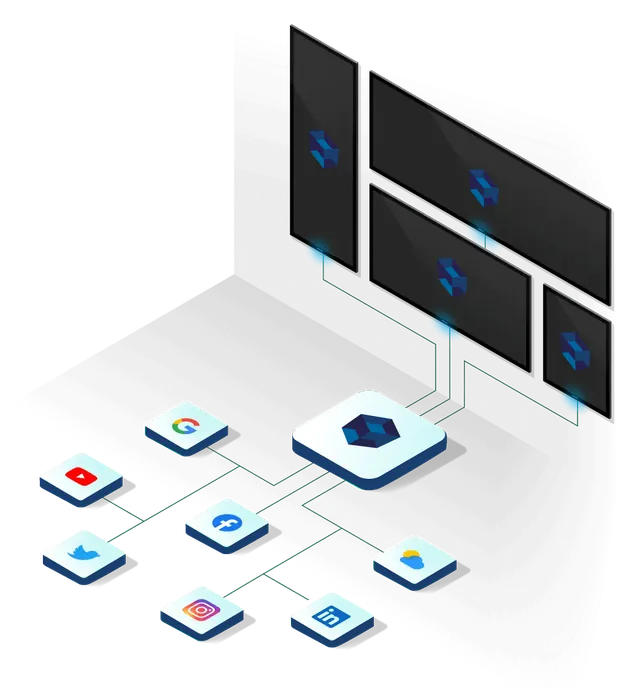
Content on e-paper panels is managed centrally through the SSCSign infrastructure together with your other displays. When a campaign changes, posters at hundreds of points are updated at the same time; printing, distribution and manual replacement steps disappear. Content preparation and the daily playout flow are handled by our content and publishing team.
Summary
A color e-paper display is the right choice for points that show static content, where a power line is hard to reach or where a clean look matters. Where video and animated content are needed, professional LCD displays are used. We can decide together which display is right for which point during the site survey.